
| By TruLight of the Midlands
Outdoor lighting installation does not have one dependable average price. A focused entry-lighting project, a multi-zone landscape plan, and a permanent roofline system solve different problems and require different equipment, wiring, access, and setup.
The best way to budget is to compare the same written scope—not two totals with different work hidden behind them. TruLight’s outdoor lighting installation service brings layout, placement, wiring routes, controls, testing, aiming, and handoff into one plan. This guide explains which decisions move the estimate and what Camden and Midlands homeowners should expect to see in a clear quote.
Why a single outdoor lighting average can mislead you
Online price ranges often combine unlike projects. One figure may describe a few low-voltage path lights, another may include new power or extensive trenching, and another may cover permanent lighting along several roofline elevations. None is useful until you know what the number includes.
A fair comparison begins with the result you want. Are you trying to see the walk from the driveway, bring depth to trees and planting beds, use the patio after dark, add permanent color to the roofline, or combine several goals? That answer defines the first scope and helps prevent paying for light in places that are not a priority.
The six decisions that shape installation cost
1. Coverage and number of lighting zones
More fixtures or longer roofline coverage usually means more equipment and installation work, but layout matters as much as quantity. Steps, entries, garage returns, side yards, trees, gables, and patios may need different fixture types or separate zones. A quote should identify every included area and any intentional endpoint.
2. Fixture or system type
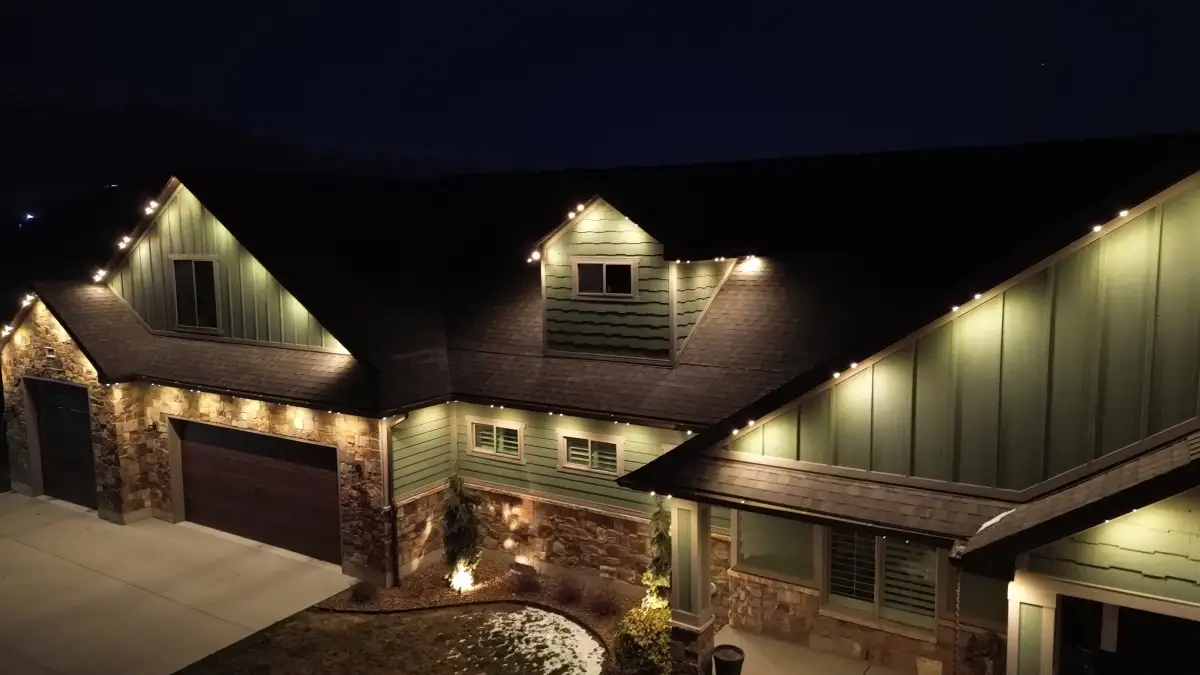
Landscape lighting may use path, accent, step, or area fixtures placed at different heights and beam angles. Permanent roofline lighting adds measured channel runs, peaks and returns, controller placement, and app setup. Comparing only the number of lights ignores those differences.
3. Wiring routes and available power
Wire distance, transformer or controller location, protected connections, outlet access, and the path around hardscape or planting beds all affect labor and materials. If the plan needs a new circuit, outlet, panel work, or other line-voltage changes, that work should be identified separately rather than assumed.
4. Height, access, and mounting surfaces
A ground-level bed is not the same installation as a steep or multi-story roofline. Roof pitch, fascia depth, gutters, masonry, driveways, mature landscaping, gates, and safe equipment access can change how the work is completed. The estimate should reflect the actual house and yard rather than a price based only on a photo or rough fixture count.
5. Controls, schedules, and setup
Simple switching, photocells, timers, separate zones, app control, saved scenes, and automation have different hardware and setup needs. Ask whether programming, zone names, schedules, app access, testing, and the homeowner walkthrough are included in the installed price.
6. New work versus an existing-system update
Reusing equipment can lower the amount of new material, but only if the fixtures, wiring, transformer capacity, controls, and connections are suitable for the new plan. Troubleshooting or correcting an older system can add labor that a new, clearly routed installation would not require.
Three project scopes that should not be priced the same way
A focused entry and arrival route
This plan may concentrate on the front walk, steps, porch, or the route from the driveway to the door. The estimate should explain fixture placement, glare control, wiring, switching or scheduling, and which nearby areas remain outside the first phase.
A landscape and outdoor-living plan
Paths, trees, garden beds, patios, and gathering areas usually need a mix of fixture types and careful aiming. Wiring distance, transformer capacity, bed and hardscape access, mowing routes, drainage patterns, and future planting growth can all affect the installation plan.
A permanent roofline system
Roofline cost is shaped by measured coverage, story height, peaks, gables, corners, garage and porch returns, mounting surfaces, power, controller placement, and control zones. A front-only phase should be easy to distinguish from broader coverage that wraps multiple elevations.
What a clear outdoor lighting quote should include
- The exact areas, elevations, fixtures, or roofline sections included.
- Fixture or system specifications and the controls that come with them.
- Wiring routes, transformer or controller placement, and known power work.
- Installation access, mounting, testing, aiming, programming, and cleanup.
- What existing equipment will be reused, replaced, or left unchanged.
- Product, workmanship, service, and maintenance terms provided in writing.
- Any exclusions, owner preparation, permit responsibility, or work assigned to another qualified trade.
When comparing proposals, place those details side by side before comparing the final totals. TruLight’s guide to comparing permanent lighting proposals shows how to review coverage, controls, warranties, and support line by line.
Do you need an electrician for outdoor lighting?
It depends on the system and the electrical work involved. Low-voltage landscape lighting and line-voltage electrical work have different requirements. New circuits, outlets, panel changes, or line-voltage fixtures may require a properly qualified electrical professional and local permits or inspections.
Ask the installer to identify the power source, voltage, equipment, and who is responsible for each part before you approve the quote. If electrical work falls outside the lighting installer’s scope, the proposal should make that clear so it is not discovered after installation starts.
How to control the budget without weakening the plan
Start with the areas you use or see most after dark. For many homes, that means the entry and arrival route, the primary street-facing elevation, or one outdoor-living area. A focused first phase can solve the main problem without spreading fixtures thinly across the entire yard.
If you expect to add lighting later, plan expansion from the beginning. Transformer or controller capacity, wiring routes, zone organization, and connection points can be considered during the first phase. That makes a later addition easier to connect without assuming every future condition or price today.
Cost considerations for Camden and Midlands homes
Homes across Camden and the South Carolina Midlands vary in setback, tree cover, grade, trim, masonry, gutter layout, and outdoor-living space. Humidity, storms, vegetation, and routine yard maintenance also make protected connections, service access, and sensible wire routes important parts of the discussion.
A property-specific walkthrough is where those conditions become a real scope. Review the Camden outdoor lighting service area or find your Midlands service area, then use the questions below to prepare for a quote.
Frequently asked questions
What is the average cost to install outdoor lighting?
A broad average is not a dependable quote because projects vary in fixture count, coverage, wiring distance, power needs, access, controls, and existing equipment. Compare written estimates for the same areas, equipment, installation work, setup, and service terms.
How much does it cost to install exterior lighting on a house?
The cost depends on whether the plan covers a focused entry, several landscape and pathway zones, permanent roofline lighting, or a combination. Height, mounting surfaces, wiring routes, power and controller placement, and the number of included elevations or zones all affect the scope.
Do you need an electrician to install landscape lighting?
It depends on the system and the electrical work involved. Low-voltage lighting and line-voltage work have different requirements. New circuits, outlets, panel changes, or line-voltage fixtures may require a properly qualified electrical professional and local permits or inspections. Ask the installer to identify who handles each part.
Can outdoor lighting be installed in phases?
Yes. A phased plan can begin with the front entry, arrival route, or primary roofline and add other areas later. The first quote should account for future transformer or controller capacity, wiring routes, zones, and connection points so later work fits the original plan.
Get a quote tied to your actual lighting plan
Contact TruLight of the Midlands to discuss the areas you want to light, the result you want after dark, your control preferences, and whether you are planning one complete installation or a phased project.