
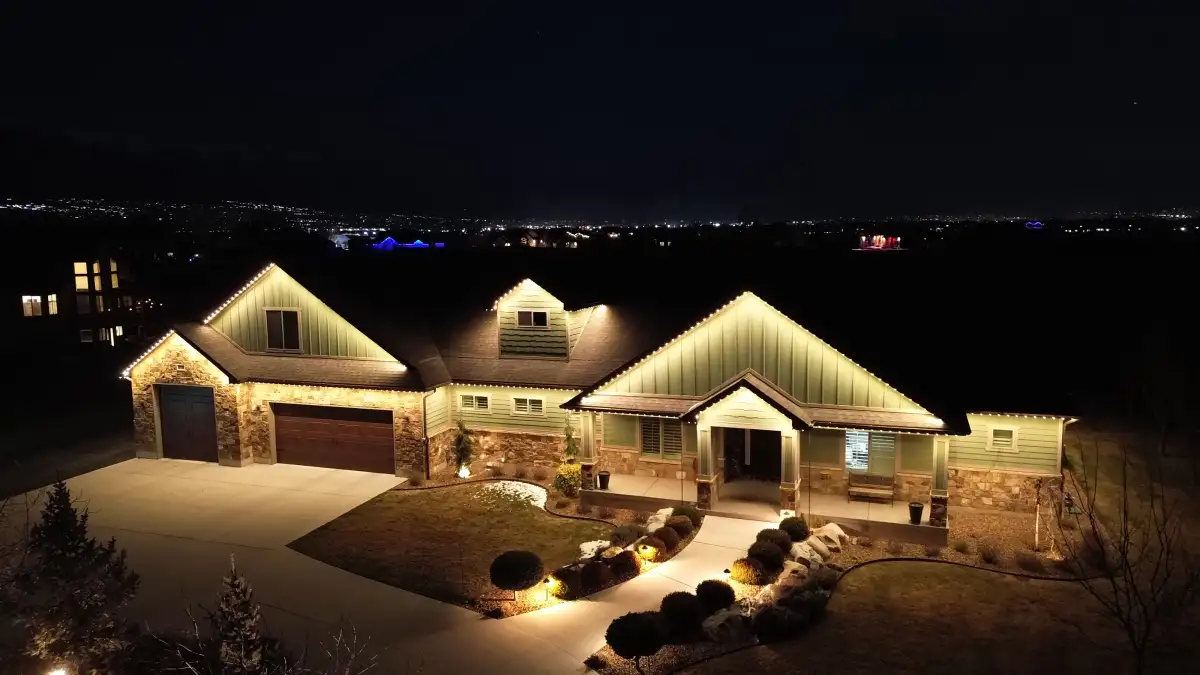
Security Lighting for Safer Evenings, Arrivals, and Camera Views
Security lighting for a home or small commercial property should make routine nighttime movement feel predictable. The first question is not which fixture is brightest. The first question is which moments need visibility: pulling into the driveway, walking from a vehicle to the door, checking a side gate, taking trash out, or reviewing a camera alert when motion is detected.
Security lighting for entries, garages, and darker edges
TruLight approaches security lighting as a layered system. Some fixtures create steady orientation light so people can move safely. Others create brighter response light when motion occurs. App control can tie those zones together so an owner can adjust schedules during travel, change brightness after guests leave, or temporarily increase output during storms and power interruptions.
A complete security lighting plan can address entry lighting, path visibility, camera support, and smart control together. It is a practical option when several areas around the property need better nighttime visibility or coordinated motion response.
Across the South Carolina Midlands, security lighting often has to handle tree cover, deep front setbacks, carports, detached shops, and homes that sit close to lake or rural roads. A property in Columbia may need tighter glare control; a property near Camden may need better approach lighting at the driveway and rear service areas.
Security lighting decisions that matter
- Choosing warm, usable light that improves recognition without creating harsh glare.
- Balancing entry visibility with perimeter awareness around the sides and rear of the property.
- Separating daily convenience scenes from higher-output motion response scenes.
- Planning controls so the homeowner can override schedules quickly from a phone.
- Aiming fixtures so cameras capture faces, vehicles, and movement instead of reflected glare.
- Leaving room for later additions if the owner adds gates, cameras, or landscape changes.
Aiming brightness where it helps without creating glare
Warm, usable light can improve recognition at entries without creating harsh glare. Balanced coverage also keeps the sides and rear of the property visible instead of concentrating every fixture near the front door.
Daily convenience scenes can remain separate from brighter motion-response lighting. Phone controls make it easy to override a schedule when guests arrive late, travel plans change, or an unexpected alert needs attention.
Careful aiming can help cameras capture faces, vehicles, and movement without reflected glare. The layout can also leave room for later gates, cameras, or landscape changes.
What the security lighting estimate reviews
Arrival visibility
TruLight identifies where people actually move after dark: driveways, garages, side entries, gates, trash routes, and the path from vehicle to door.
Camera support
The estimate reviews existing camera views, reflective surfaces, mounting height, and aiming so added light improves footage instead of creating glare.
Motion response
Security zones can use steady low-level light, brighter motion scenes, or app overrides depending on how the property is used at night.
Security lighting choices that improve recognition
Good security lighting improves recognition without making the property feel harsh. TruLight uses warm, controlled output so faces, vehicles, entries, and walkways are easier to see.
Fixture placement is coordinated with camera views, doors, garages, and side yards. The goal is to remove dark routes without sending glare into windows or neighboring properties.
Controls can separate convenience from response. A low evening scene may handle normal movement, while a brighter motion-triggered zone can activate near a gate, driveway, or rear entry.
If the owner may add cameras, gates, or landscape changes later, TruLight considers those future zones before the first security fixtures are mounted.
For security lighting, the final check is whether deterrence, camera support, and daily convenience are working together. A good system should make arrivals easier, make suspicious movement more visible, and still feel normal when the property is simply being used on a quiet evening.
Answers about glare, cameras, and motion response
Will brighter lights always improve security?
Not always. Excessive brightness can create deep shadows beside the lit area and can make cameras overexpose. A balanced layout with correct aiming usually performs better than one oversized fixture.
Can the lights work with existing cameras?
Most systems can be planned around existing camera views. TruLight looks at where each camera points and places light so the image is clearer at night.
Is this only for houses?
No. Security lighting can be planned for small businesses, churches, shops, barns, and other properties that need better visibility after closing or after dark.
Pair security coverage with everyday exterior lighting
Outdoor Security Lighting
Focus on visibility around entries, garages, driveways, side yards, and other areas that need better nighttime coverage.
View Service →Residential Outdoor Lighting
Plan everyday lighting for porches, walkways, garages, patios, and family routines around the home.
View Service →Smart Outdoor Lighting
Use app scenes and schedules to adjust security-oriented zones without walking outside to change settings.
View Service →Map darker approaches before they become a problem
Request a security lighting estimate that maps entries, dark zones, camera views, and motion response needs around your property.
Request Your Free Estimate