
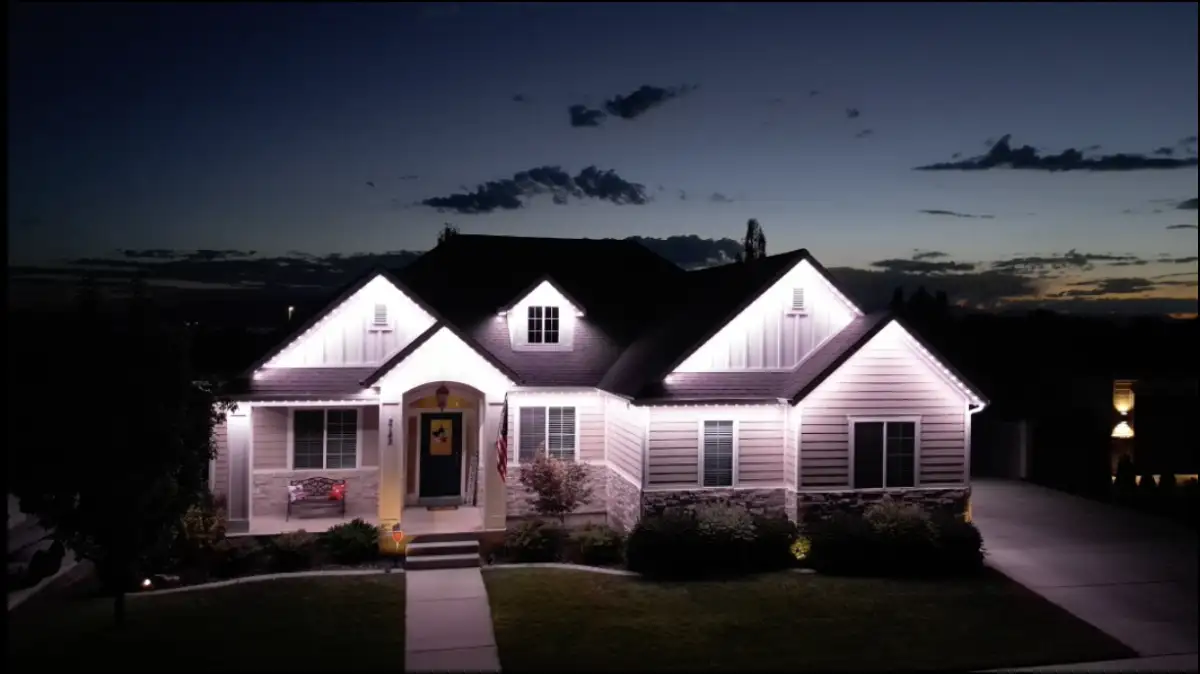
Outdoor Security Lighting Built Around Real Property Risks
Outdoor security lighting is about controlling the parts of a property where people approach after dark: the driveway edge, the walk from the parking area, side gates, detached garages, equipment pads, and the back door. TruLight plans these systems by walking the site at eye level and asking where a homeowner, guest, delivery driver, or service technician actually moves. That produces a different plan than simply adding the brightest fixture over the nearest door.
Lighting for darker approaches and overlooked side areas
In the Midlands, outdoor security lighting also has to respect long driveways, pine shade, wide front yards, and neighbors who may be close on one side and far away on the other. A useful system adds visibility without washing bedroom windows, throwing glare across a road, or making camera footage bloom into a white blur. Shielding, aim, mounting height, and sensor placement matter as much as fixture output.
Exterior security lighting starts with dark-zone mapping around entries, driveways, walkways, detached structures, and side yards. Targeted LED fixtures, motion zones, and optional smart controls help improve visibility without over-lighting the property.
Security needs are not identical in Camden, Columbia, Lugoff, Chapin, and rural Kershaw County. Some homes need a long driveway entrance marked clearly; others need a narrow side yard brightened without sending light into a neighbor's window. TruLight adjusts the recommendation to the property, not to a fixed package.
Security lighting priorities
- Maps approach routes before choosing fixtures, so the plan follows real movement patterns.
- Prioritizes gates, side yards, service doors, sheds, detached garages, and camera views.
- Uses shielded output to avoid glare complaints and keep light on the intended property.
- Separates constant low-level visibility from motion-triggered alert lighting where useful.
- Considers how pets, branches, vehicles, and road traffic may affect motion sensor placement.
- Connects lighting decisions to camera clarity instead of treating cameras and lights separately.
Placing security lighting where people actually move
Security lighting should follow the routes people actually use around the property. Driveways, gates, side yards, service doors, sheds, detached garages, and camera views may each need different coverage.
Shielded fixtures can keep light on the intended property and reduce glare. Steady low-level visibility can handle routine evenings, while separate motion-triggered lighting provides a brighter response when activity is detected.
Pets, moving branches, passing vehicles, and road traffic can affect motion sensors, so placement matters. Lighting aimed with existing cameras in mind can also improve nighttime clarity without creating reflected glare.
What visibility concerns are reviewed
Risk areas
TruLight walks the property for service doors, dark side yards, detached garages, gates, blind corners, and parking transitions that need better awareness after sunset.
Camera support
The estimate considers camera locations, motion zones, aiming angles, and glare control so added light helps nighttime footage instead of washing it out.
Neighbor-aware output
Security lighting should improve visibility without sending harsh light into bedrooms, roads, or neighboring yards. Shielding, mounting height, and beam spread are selected around that balance.
Lighting that follows real approach routes
Security lighting should follow the ways people actually approach the property. TruLight reviews driveways, side gates, detached garages, sheds, service doors, equipment areas, back entries, and camera views before selecting fixture locations.
Shielding and aim keep light on the intended areas instead of spilling into windows or neighboring yards. The best system improves awareness without making the home feel overexposed or uncomfortable after dark.
Constant low-level visibility and motion-triggered alert lighting can be separated by zone. That allows a driveway or entry to stay welcoming while side yards and service areas receive stronger response lighting only when needed.
Outdoor security lighting should improve awareness without making the property feel overexposed. The best layout gives family members, guests, cameras, and neighbors useful visibility while still keeping the home comfortable after dark.
Outdoor Security Lighting questions
Should security lights stay on all night?
Some zones should stay at a low level from dusk to dawn, while others work better on motion. The right mix depends on the camera locations, nearby bedrooms, and how often people move through that part of the property after dark.
Can security lighting be attractive?
Yes. Shielded fixtures, hidden wiring, and warm-white output can create a clean look while still improving visibility. Security lighting does not have to look like a commercial floodlight.
What is checked during the estimate?
TruLight reviews dark zones, access points, available power, mounting surfaces, sensor range, camera angles, and the amount of light that could spill beyond the property line.
Security lighting services for darker exterior zones
Security and Safety Lighting
Combine brighter arrival paths with thoughtful fixture placement so the property feels easier to use at night.
View Service →Smart Home Outdoor Lighting
Coordinate security-focused zones with household apps, doorbells, cameras, travel settings, and simple shared controls.
View Service →Outdoor Lighting Automation
Use schedules, timers, and app scenes to keep exterior lighting consistent without daily adjustments.
View Service →Improve visibility where your property needs it most
Request an outdoor security lighting review focused on approaches, cameras, garages, side yards, gates, and the darker routes people use around your Midlands property.
Request Your Free Estimate