
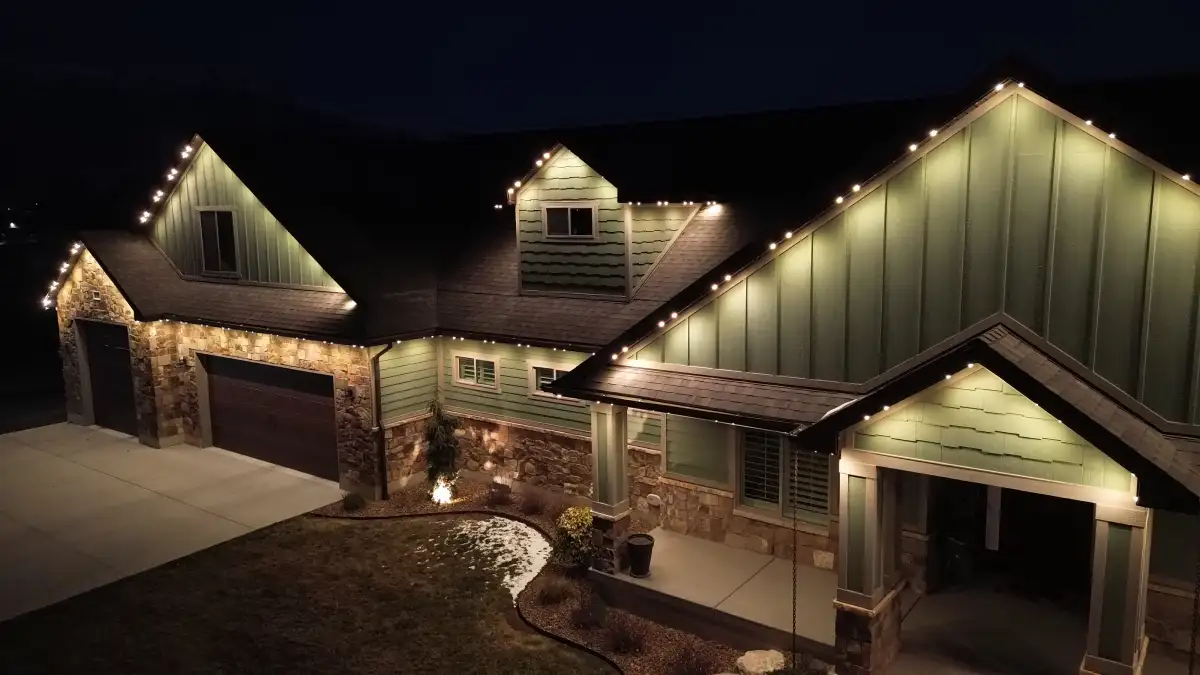
A well-planned exterior lighting system can make doors, walks, driveways, and side yards easier to see after dark. For homeowners in Columbia, Camden, Lexington, and across the SC Midlands, outdoor security lighting can support everyday awareness and discourage unwanted activity when it is used as one part of a broader home-security plan.
This guide covers what security lighting can and cannot do, where useful placement improves visibility, and how motion response, scheduling, cameras, and permanent outdoor lighting systems can work together without relying on harsh floodlight glare.
How Lighting Supports a Layered Security Plan
Dark yards, unlit side entrances, and shadowed back porches make it harder for residents, neighbors, and cameras to see activity around a home. Thoughtful lighting improves visibility in those areas, but it does not monitor the property or replace locks, alarms, cameras, or attentive neighbors.
Low-level ambient lighting can keep important areas visible through the evening, while motion-activated lighting can draw attention to activity in a selected zone. The right approach depends on the home, neighboring properties, camera placement, and how residents use the exterior. Neither approach guarantees deterrence, and illumination alone does not mean a property is being monitored.
Security Lighting Placement: Where It Matters Most
Effective security lighting follows a simple principle: eliminate dark zones where someone could approach or hide without being visible from the street, neighboring properties, or interior windows. Here are the priority zones for every Midlands home.
All Entry Points
Every exterior door — front, back, side, and garage — should have direct lighting overhead or adjacent. This includes secondary entrances that homeowners often overlook: the side door to the garage, the back patio sliding door, and any basement access. Intruders frequently avoid front doors (too visible) and instead target less-monitored entries. Lighting every entry point equally removes the advantage of choosing a less-visible door.
Driveways and Walkways
The path from the street to your front door and from the driveway to the garage should have enough light for people to see changes in grade, steps, and obstacles. This supports both nighttime awareness and safer movement for you and your guests, especially after Midlands storms leave debris on walkways.
Side Yards and Blind Spots
The narrow passages between homes and fences are the most commonly exploited blind spots. In Lexington, Irmo, and Columbia subdivisions where lots are close together, side yards can be almost completely dark after sunset. Even modest lighting — a single landscape light midway along each side of the home — eliminates the shadow corridor that makes these areas attractive to intruders.
Backyard Perimeter
The backyard is statistically the most vulnerable area of residential properties because it is typically screened from street view by the house itself. Fence lines, storage sheds, tree lines, and patio overhangs all create dark zones. Perimeter lighting along the fence line or property edge, combined with targeted lighting on outbuildings and the back of the home, provides comprehensive coverage without the harsh glare of traditional security floodlights.
Garage and Outbuilding Areas
Detached garages, workshops, pool houses, and storage buildings often sit farther from the occupied home and can be difficult to see after dark. Dedicated lighting on these structures, including scheduled or motion-responsive options, improves visibility around doors, vehicles, and work areas.
Permanent Lighting vs. Traditional Security Floodlights
For decades, the default security lighting solution was a pair of motion-activated halogen floodlights mounted under the roofline. They worked, but they came with significant drawbacks: harsh blinding glare, high energy consumption, frequent bulb replacement, false triggers from animals and wind, and the fact that they left the property dark until activated.
Permanent outdoor lighting systems have replaced this approach with a fundamentally better solution. Here is why.
Always-On Ambient Lighting
Permanent LED systems can provide low-level ambient light in selected zones, then brighten those areas when needed. Compared with one harsh floodlight, a layered layout can improve visibility with less glare and fewer deep shadows. It remains one part of home security, not a promise that unwanted activity cannot occur.
Smart Controls and Scheduling
Modern permanent lighting systems connect to smartphone apps that allow you to set schedules, adjust brightness, change colors, and activate security modes from anywhere. Traveling for vacation? Set the lights to run their normal evening pattern so the home looks occupied. Hosting an event? Brighten the entire property with one tap. Hear something unusual at 2 AM? Turn every light to full brightness from your phone without leaving bed.
Zone-Based Motion Response
Unlike basic floodlights that have a single motion sensor covering a wide arc, permanent systems can integrate zone-based motion sensors. When motion is detected in the side yard, that zone brightens while the rest of the property maintains its ambient level. This targeted response is more effective than flooding the entire property with light (which blinds you to everything outside the light cone) and draws attention specifically to the area where activity was detected.
Camera Integration
Permanent lighting systems work in concert with security cameras rather than against them. The consistent ambient lighting eliminates the extreme contrast shifts that motion-activated floodlights create — those sudden bright-to-dark transitions that wash out camera footage and create blind spots in recordings. Cameras perform best under even, consistent lighting, which is exactly what permanent systems provide.
Security Lighting for the SC Midlands Climate
The Midlands of South Carolina presents specific considerations for outdoor security lighting that differ from other regions.
Summer Heat and Humidity
Columbia regularly hits the top-10 list for hottest U.S. cities, with summer temperatures exceeding 95 degrees and humidity above 80%. These conditions degrade inferior lighting components quickly. Cheap plastic fixtures warp, adhesives fail, and electrical connections corrode. Professional-grade permanent lighting systems use marine-rated components, UV-stabilized housings, and sealed electrical connections rated for sustained heat and moisture exposure. This is not where you want to economize — a fixture failure during a summer thunderstorm blackout is exactly when you need security lighting most.
Storm and Power Outage Preparedness
The Midlands experiences frequent severe thunderstorms from May through September, and occasional tropical weather from the coast. Power outages are not uncommon. Permanent lighting systems can be paired with battery backup or low-voltage configurations that draw minimal power from a home generator. Some systems include automatic emergency modes that activate a reduced-brightness security pattern during power interruptions.
Wooded Lots and Rural Properties
Many Midlands properties — particularly in Camden, Lugoff, Elgin, and the Blythewood area — sit on larger wooded lots with limited street lighting. These rural and semi-rural properties benefit more from security lighting than suburban homes because there is less ambient light from neighbors and streetlamps. Even modest perimeter lighting makes a dramatic difference on a property surrounded by unlit acreage.
The Insurance Angle
Several homeowner insurance providers offer premium discounts for properties with documented security improvements, including exterior lighting systems. The discount varies by carrier and policy, but typically ranges from 2-5% on annual premiums. For a home insured at $200,000 with a $1,500 annual premium, a 5% discount saves $75 per year. Over the 15-20 year lifespan of a permanent lighting system, those savings add up alongside the reduction in energy costs compared to older lighting technology.
Contact your insurance agent to ask specifically whether exterior security lighting qualifies for a discount on your policy. If documentation is required, professional installation typically includes a specification sheet that satisfies insurer requirements.
Cost of Security Lighting in the SC Midlands
Professional outdoor security lighting in the Midlands typically falls into three tiers based on scope and technology:
Basic coverage (entry points + driveway): $1,500 to $3,000. Covers the front entry, garage, and back door with targeted fixtures on automated timers. Suitable for smaller properties or as a starting point.
Comprehensive coverage (full perimeter + zones): $3,000 to $6,000. Covers all entry points, side yards, backyard perimeter, and walkways with a connected system allowing zone control and scheduling via smartphone.
Full property system (home + outbuildings + landscape): $6,000 to $12,000+. Complete coverage including the main residence, detached garage or outbuilding, pool area, fence line, and integrated landscape accent lighting that doubles as security lighting. Includes smart home integration and optional camera system coordination.
These ranges reflect installed pricing for permanent LED systems with professional design and installation in the Columbia, Lexington, Camden, and Irmo areas.
Take the First Step Toward a Safer Home
Outdoor lighting can strengthen a broader security plan by improving visibility at entries, paths, driveways, and other areas you want to see clearly after dark. Strategic placement, appropriate brightness, and dependable controls can make everyday arrivals more comfortable while supporting cameras, alarms, locks, and other protective measures already in use.
Our team designs and installs security lighting systems across Columbia, Camden, Lexington, Irmo, Blythewood, Sumter, and all of the SC Midlands. Every installation starts with an on-site assessment where we identify the specific dark zones and vulnerability points on your property, then design a system that addresses them. Request a free consultation or call 803-592-9626 to get started.