
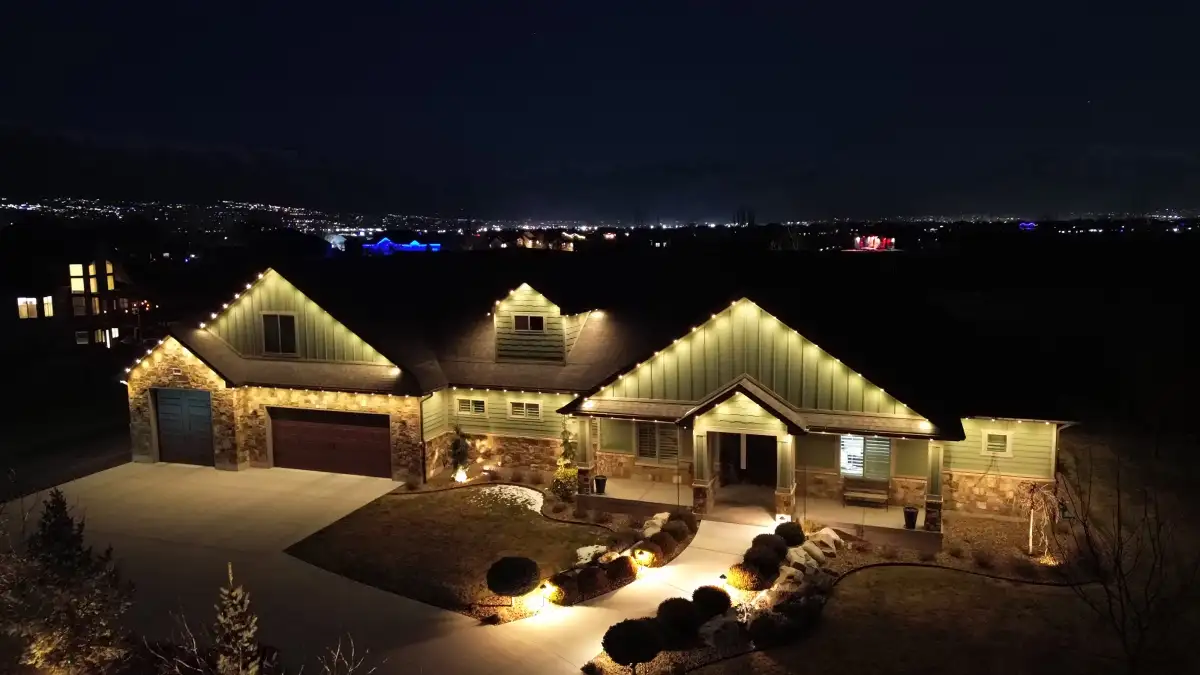
| By TruLight of the Midlands
The best time to ask about permanent lighting maintenance is before the system is attached to the house. A strong proposal should explain not only how the lights will look, but also how the system will be controlled, checked, serviced, and documented after installation.
That long-term view matters for Camden homes with everything from older architectural details to newer multi-gable rooflines. Trim, fascia, soffits, gutters, tree cover, power access, and the views from the street or driveway can all influence the design. Start with TruLight’s permanent lighting service and Camden outdoor lighting service area, then use the questions below to prepare for a property-specific conversation.
1. How will we use the lights outside the holiday season?
Permanent lighting can support holiday color, but that should not be the only scene you evaluate. Ask to see the warm-white setting, brightness range, schedules, and any zones you would use for ordinary evenings, arrivals, gatherings, or game days. A system that fits daily routines is easier to assess as a year-round home feature.
List the two or three uses that matter most before discussing patterns and color libraries. That keeps the conversation focused on the roofline views and controls your household will actually use rather than on a long feature list.
2. What exactly is included in the measured roofline scope?
A footage total does not show where the lighting begins or ends. Ask the proposal to name each included elevation, peak, gable, garage return, porch line, and short transition. If one side is excluded, make sure the endpoint will still look intentional from the street, driveway, and main entrance.
This is also the right time to discuss future phases. If the first project covers only the primary elevation, ask whether the power, controller, and zone plan can accommodate a later addition. TruLight’s design and consultation service provides a path for working through roofline shape, nighttime goals, and access before the scope is set.
3. Which parts of the system can be serviced separately?
Permanent lighting is a system, not a single fixture. It may involve a power source, controller, connections, wiring, mounting channel, light sections, app, and home network. If part of the roofline stops responding, the cause may be limited to one component or section.
Ask how the layout is divided, how an isolated problem is diagnosed, which components remain reachable for service, and who should be contacted. A clear answer is more useful than a broad promise that the lights will last. Product terms, workmanship terms, and future service responsibilities should be explained separately in writing.
4. What maintenance should the homeowner handle?
Routine ownership should not require a homeowner to climb onto the roof. Ground-level checks can reveal a loose-looking channel, a dark section, vegetation pressing against the roofline, or a change after gutter, fascia, paint, pest-control, or roofing work. Test a few saved scenes and schedules periodically so a control issue is noticed before a holiday or event.
Ask what should be left untouched, when professional inspection is appropriate, and whether exterior contractors need instructions before working near the system. Keep controller information, app access, zone names, and the service contact in one place. That basic record can shorten a later troubleshooting conversation.
5. What happens when the phone, router, or Wi-Fi password changes?
App control should work for normal household changes, not just during the final walkthrough. Ask how another household member receives access, whether schedules continue without a phone nearby, and how to reconnect after a new router or Wi-Fi password. Confirm where the controller is located and whether it can be reached without disturbing the roofline.
During setup, use plain zone names such as “front gables,” “garage,” or “porch.” Save at least one everyday white scene and one schedule while the installer is present. For a deeper control checklist, see TruLight’s smart outdoor lighting options.
6. Will later exterior work affect the installation?
Permanent lighting remains in place through seasonal cleanup and future home maintenance. Tell the lighting designer about planned roof, gutter, fascia, soffit, paint, or trim work before the mounting location is approved. It may be better to sequence another exterior project first.
Also review cable paths, corners, track color, controller placement, and transitions in daylight. Nighttime effects can hide details that remain visible when the lights are off. A ground-level daytime review helps Camden homeowners judge how the system will sit against the home year-round.
7. What records and instructions come with the finished system?
Before booking, ask what the handoff includes. Useful records identify the installed roofline sections, zone names, controller and power locations, app access steps, routine operating instructions, applicable product and workmanship terms, and the process for requesting service.
The written quote should also state installation access, setup and walkthrough, cleanup, exclusions, scheduling assumptions, and any homeowner preparation. If a phrase or rule in the proposal is unclear—including a reference such as the “5'7" lighting rule”—ask what is being measured and why it applies to this house. Ambiguous shorthand should never replace a measured layout.
A long-term ownership checklist
- Every installed roofline section and intentional endpoint is documented.
- Power, controller, connections, zones, and service access are explained.
- Everyday white light, brightness, schedules, and household app access are tested.
- Homeowner checks are separated from elevated inspection or repair.
- Future roof, gutter, fascia, and paint work is discussed before installation.
- Product, workmanship, and service terms are provided in writing.
If you are still comparing initial scope and price, the previous Camden permanent lighting guide focuses on quote coverage, installer responsibilities, and proposal details.
Frequently asked questions
What is the average cost of permanent lighting?
A broad average does not show what a Camden home will cost. A useful estimate connects the total to measured roofline coverage, height and access, peaks and returns, mounting details, power and controller locations, control zones, setup, and the written service scope.
What is the 5'7" lighting rule?
The phrase is used inconsistently and is not a reliable specification for permanent roofline lighting. Ask what is being measured and why. The layout should instead be based on the roofline, mounting surface, manufacturer guidance, viewing distance, light spacing, and the intended effect.
What are common failures for permanent light fixtures?
A dark or unresponsive section can involve the power source, controller, connection, wiring, light section, app, or network rather than every fixture. Before booking, ask how the system is divided into serviceable sections, how a problem is diagnosed, and who provides support.
How do you maintain permanent lights on a house?
Use ground-level visual checks, keep vegetation away from the roofline where practical, test everyday scenes and schedules, retain app and system information, and report loose track, damaged wiring, moisture concerns, or an unresponsive section. Elevated inspection or repair should be left to a qualified service provider.
What should I receive after permanent lighting installation?
Ask for app access, zone names, schedule instructions, controller and power locations, applicable product and workmanship terms, service contact information, and a clear record of which roofline sections were installed.
Ask the long-term questions before you book
Contact TruLight of the Midlands to discuss your Camden roofline, preferred everyday and seasonal uses, controls, access, and the information you want included in a permanent lighting proposal.